
Kindergarten math
See what your child already knows.
Try math together. Notice what feels easy and what needs another try.
Your child answers. You explore together.
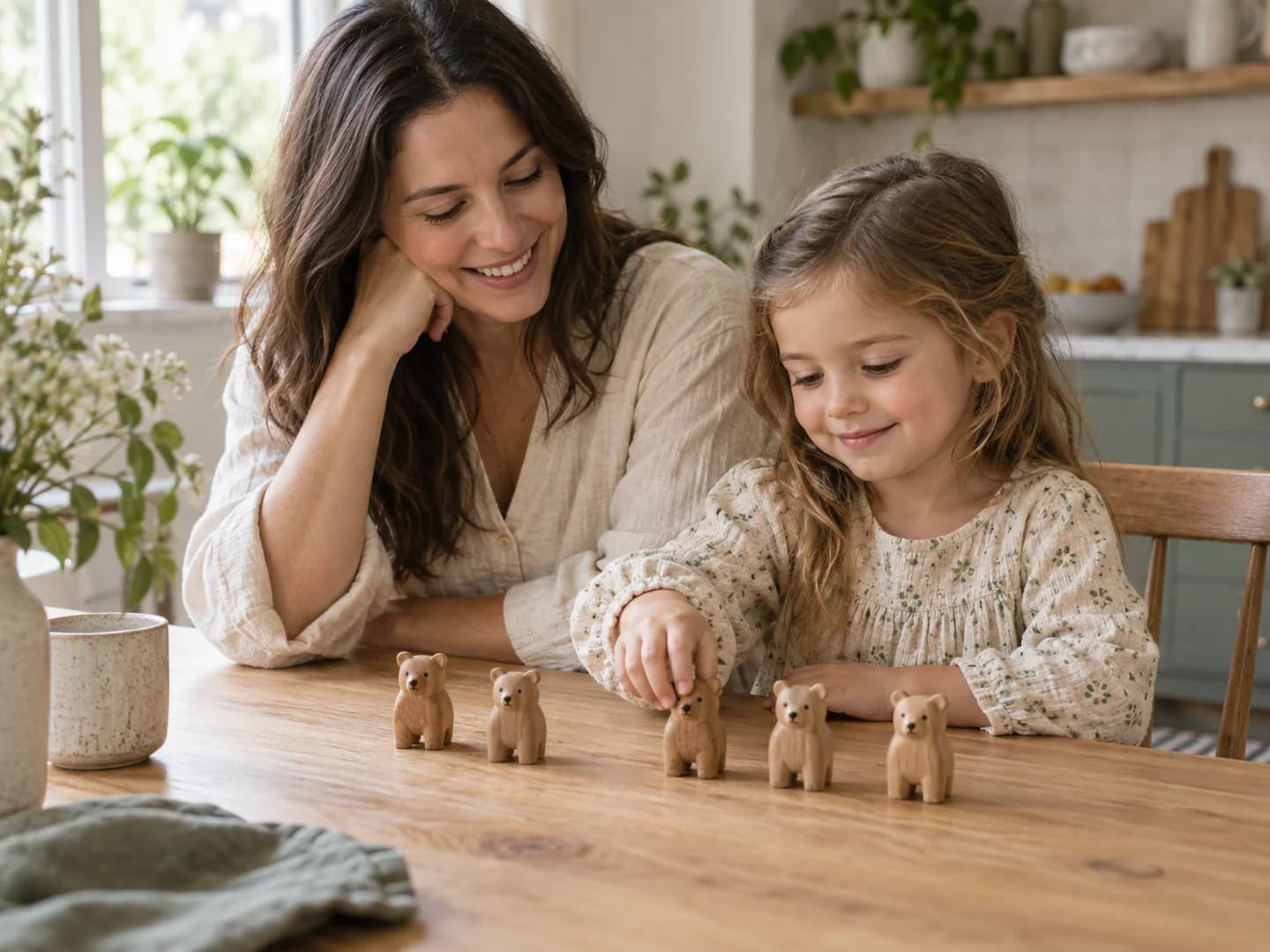
Choose an activity
Pick an activity from the curriculum below.
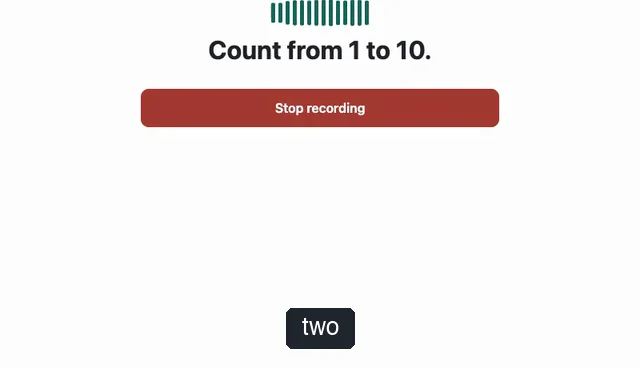
Let them try
Let your child answer at their own pace.
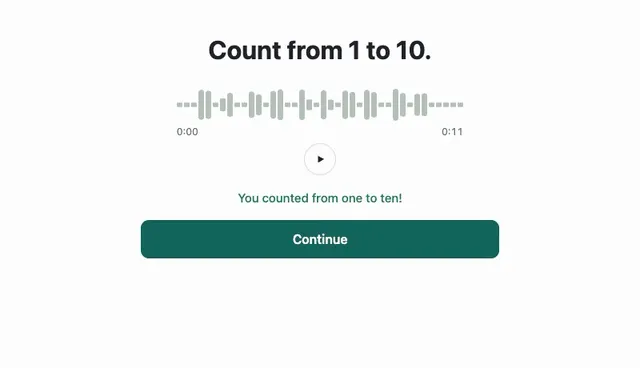
See how it went
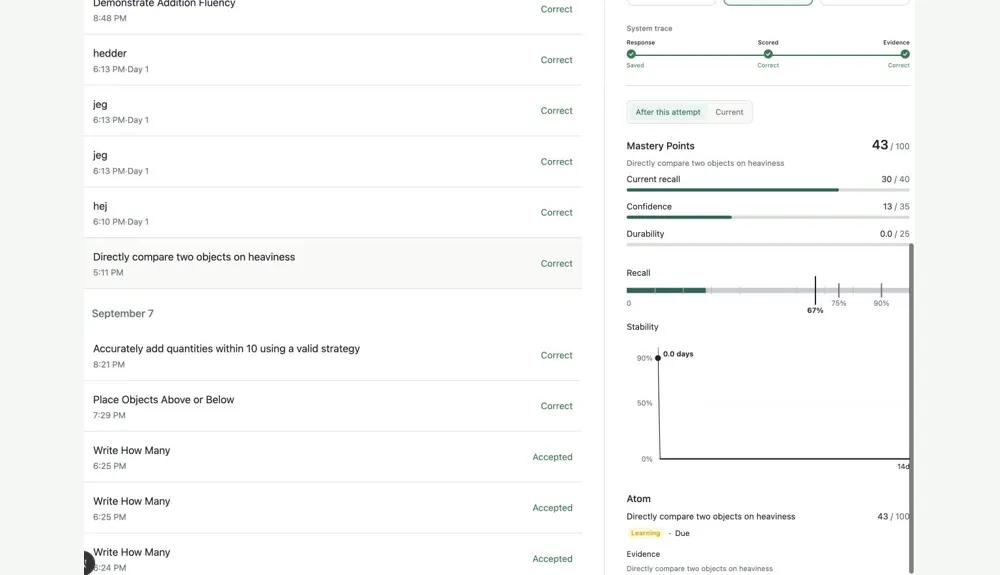
See how recall and lasting knowledge develop.
What would you like to explore?
Explore the curriculum
Kindergarten math curriculum
Open a topic to see what your child can explore and choose an activity to try together. This draft includes optional extension skills.
CountingNumber sequences, counting objects, and recognizing small quantities.21 skills
Count forwardCounting up by ones, fives, and tens.6 skills
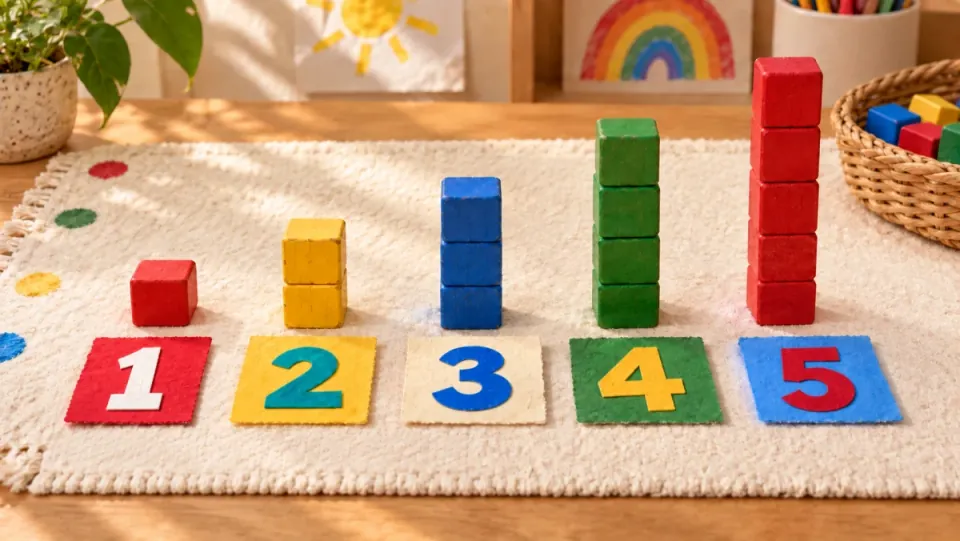
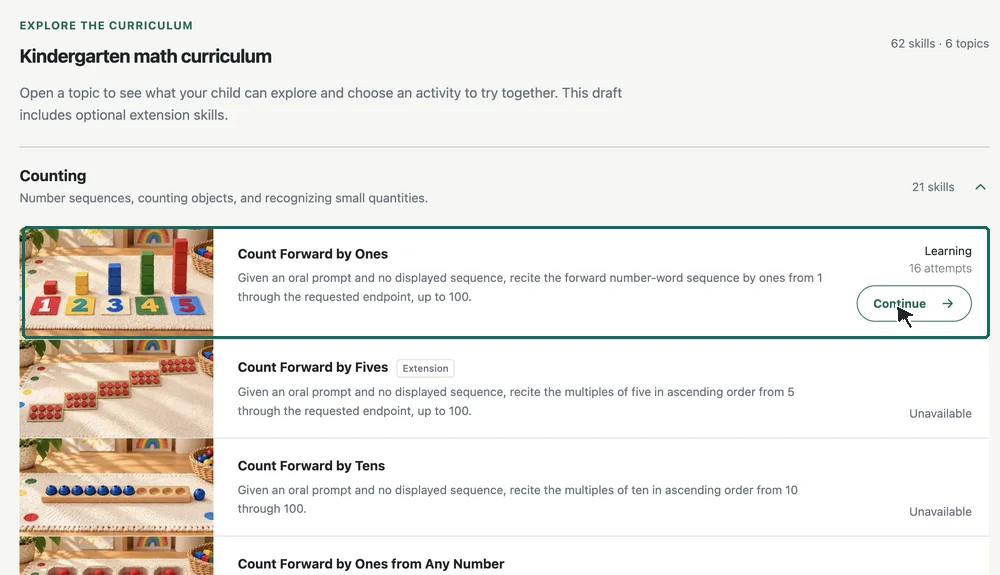
Count Forward by Ones
Given an oral prompt and no displayed sequence, recite the forward number-word sequence by ones from 1 through the requested endpoint, up to 100.
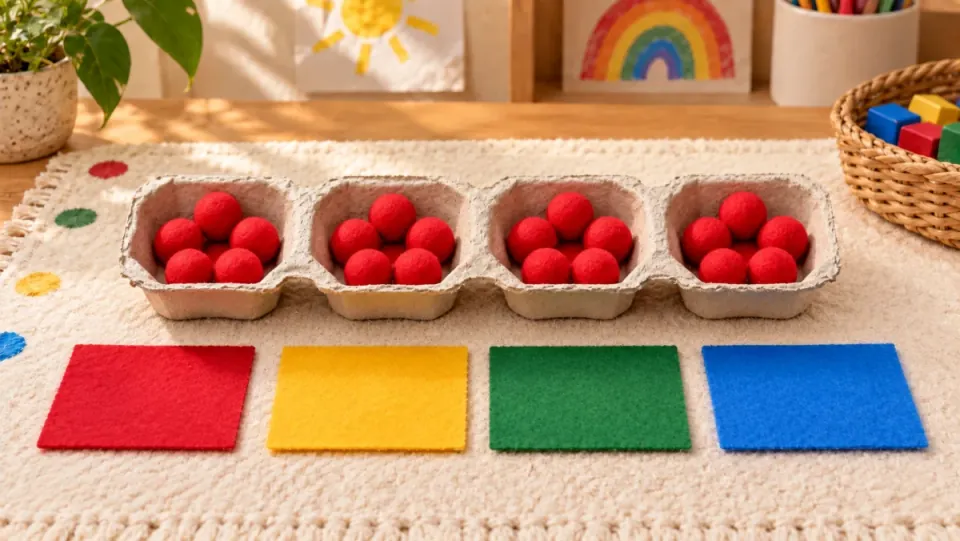
Count Forward by Ones from Any Number
Given any starting whole number from 0 through 100, continue the forward number-word sequence by ones without restarting at 1.
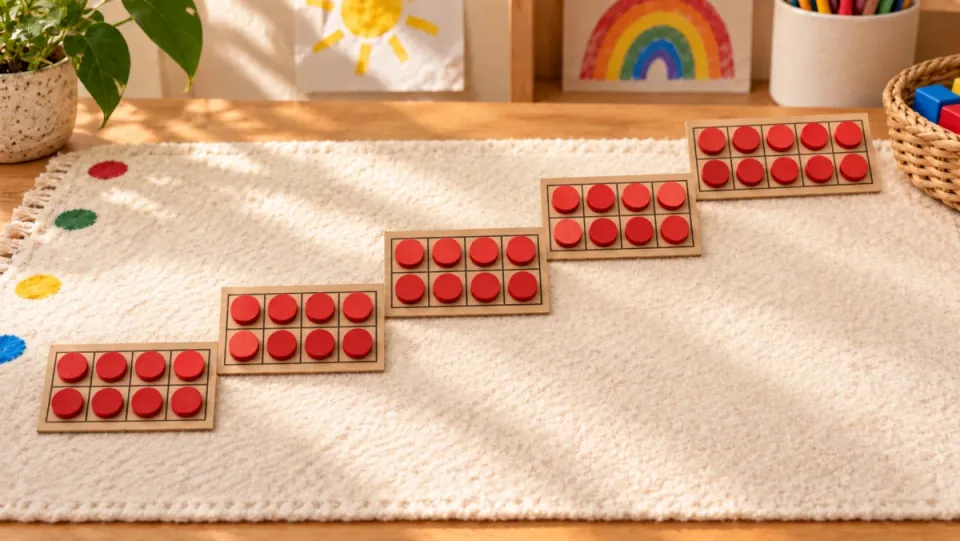
Count Forward by Fives Extension
Given an oral prompt and no displayed sequence, recite the multiples of five in ascending order from 5 through the requested endpoint, up to 100.
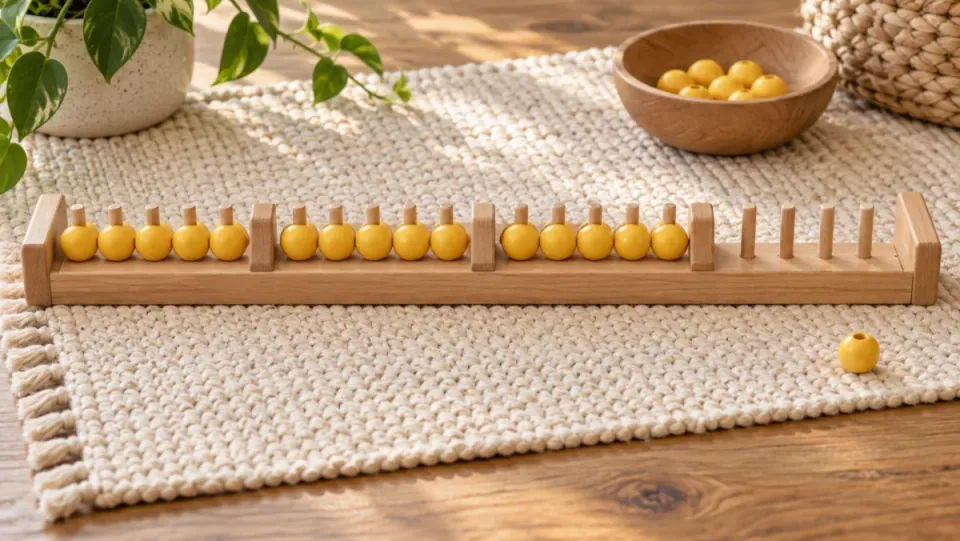
Count Forward by Fives from Any Multiple of Five Extension
Given any multiple of five from 0 through 95, continue counting forward by fives without restarting at 5.
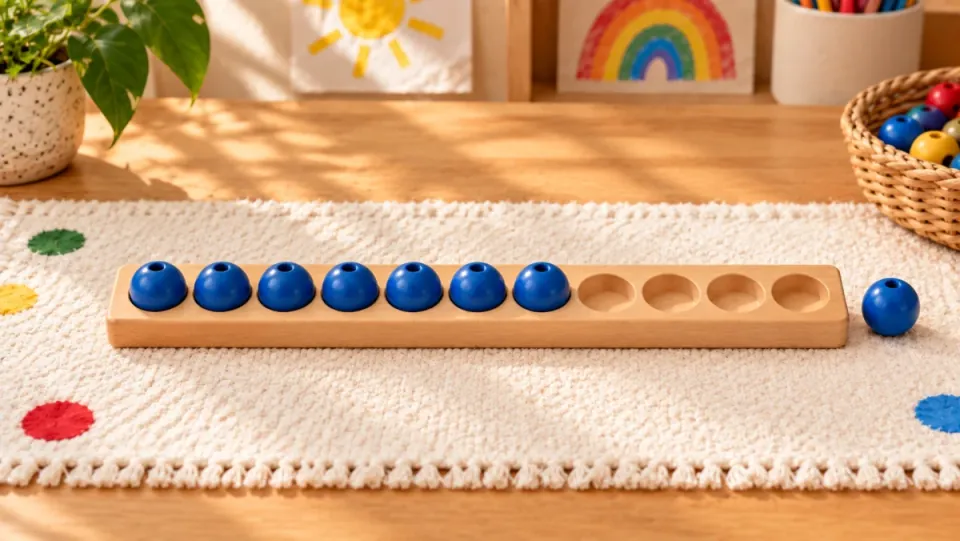
Count Forward by Tens
Given an oral prompt and no displayed sequence, recite the multiples of ten in ascending order from 10 through 100.
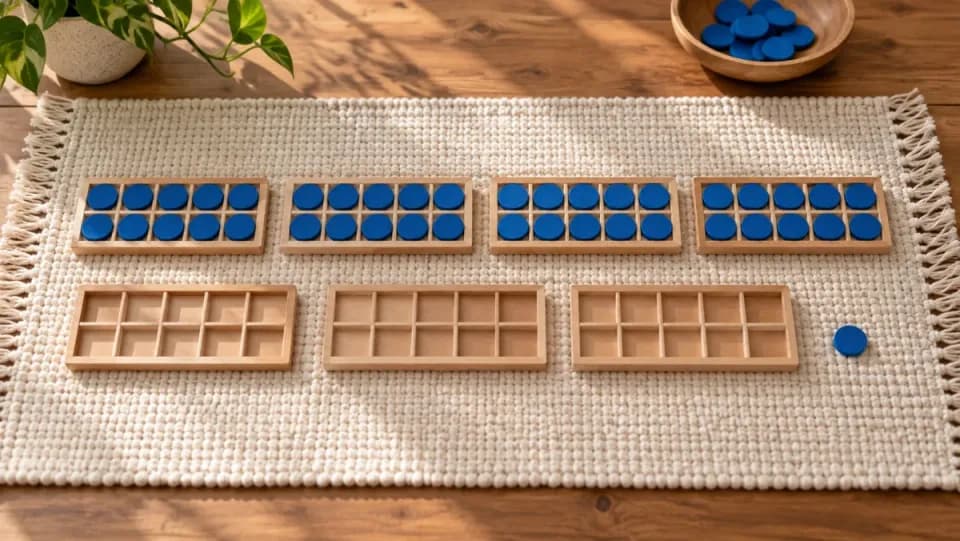
Count Forward by Tens from Any Multiple of Ten
Given any multiple of ten from 0 through 90, continue counting forward by tens without restarting at 10.
Count backwardsCounting down by ones, fives, and tens.6 skills
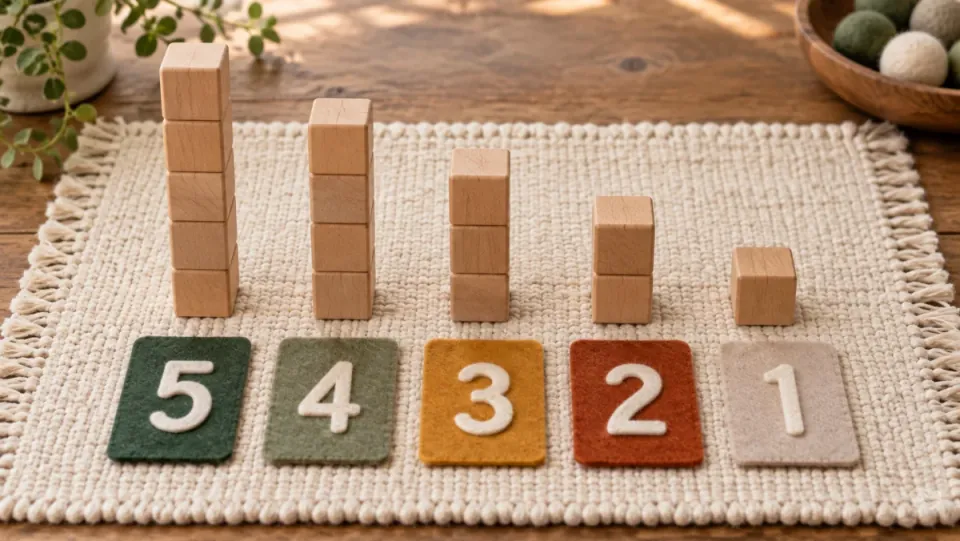
Count Backward by Ones
Given an oral prompt and no displayed sequence, recite the backward number-word sequence by ones from the requested starting point to 0, up to a starting point of 100.
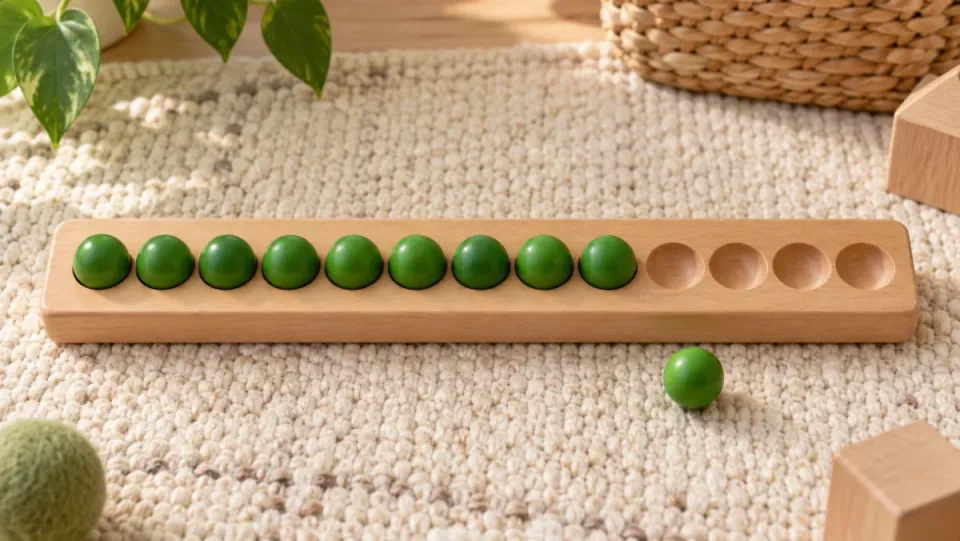
Count Backward by Ones from Any Number
Given any starting whole number from 0 through 100, continue the backward number-word sequence by ones without restarting from a memorized endpoint.
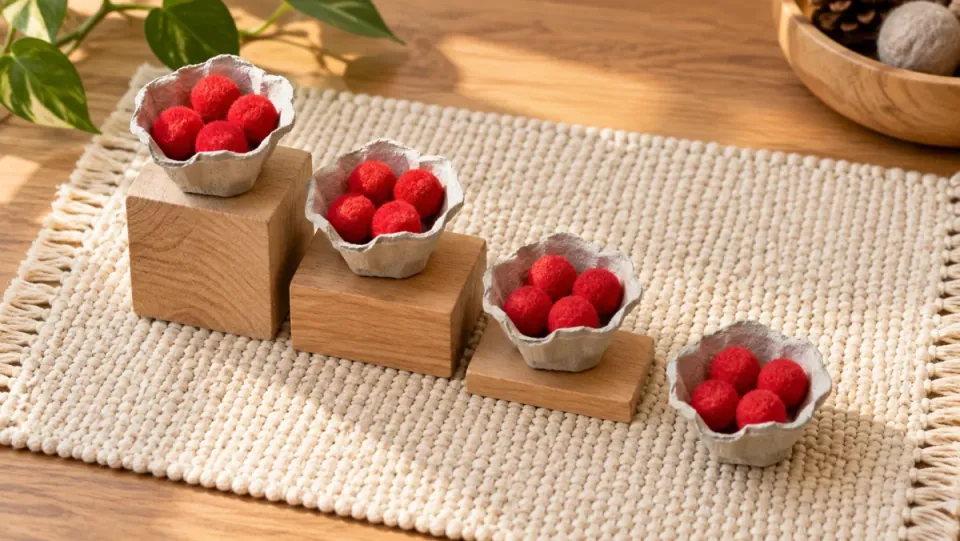
Count Backward by Fives Extension
Given an oral prompt and no displayed sequence, recite multiples of five in descending order from the requested starting multiple through 0, up to 100.
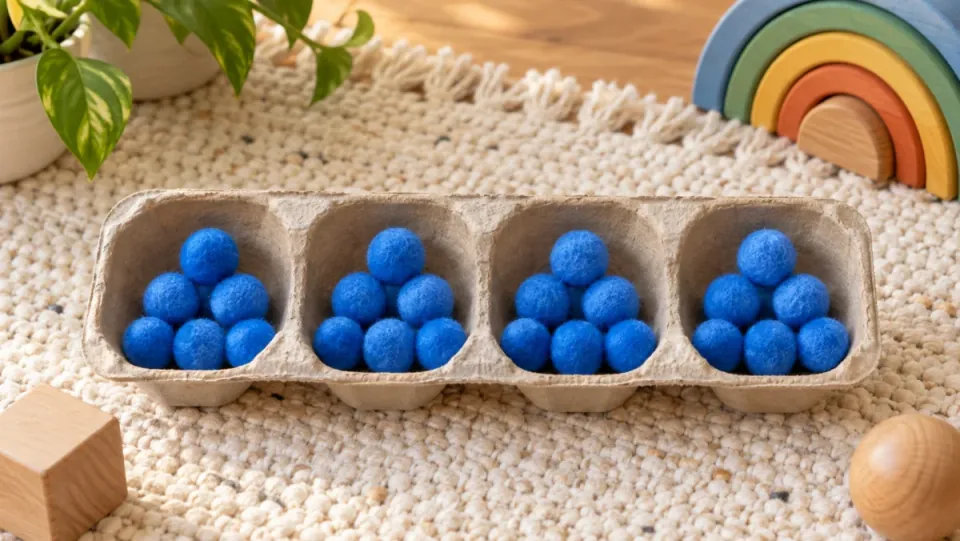
Count Backward by Fives from Any Multiple of Five Extension
Given any multiple of five from 5 through 100, continue counting backward by fives without restarting at 100.
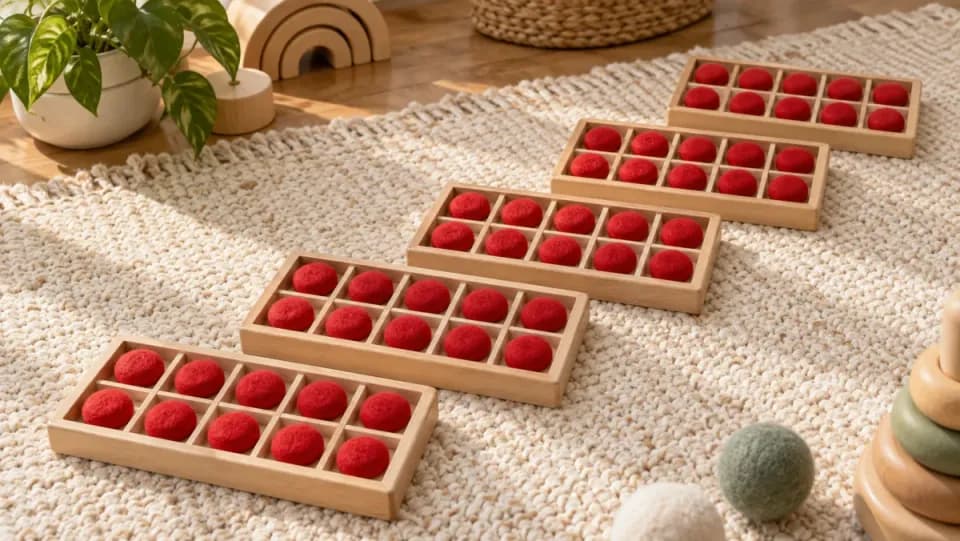
Count Backward by Tens Extension
Given an oral prompt and no displayed sequence, recite multiples of ten in descending order from 100 through 0.
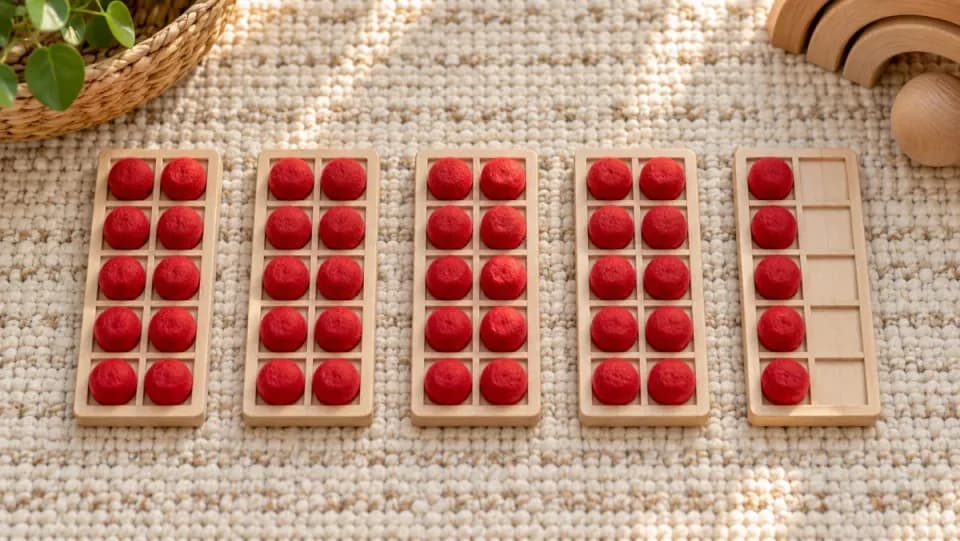
Count Backward by Tens from Any Multiple of Ten Extension
Given any multiple of ten from 10 through 100, continue counting backward by tens without restarting at 100.
Count objectsCounting collections and recognizing small quantities.3 skills
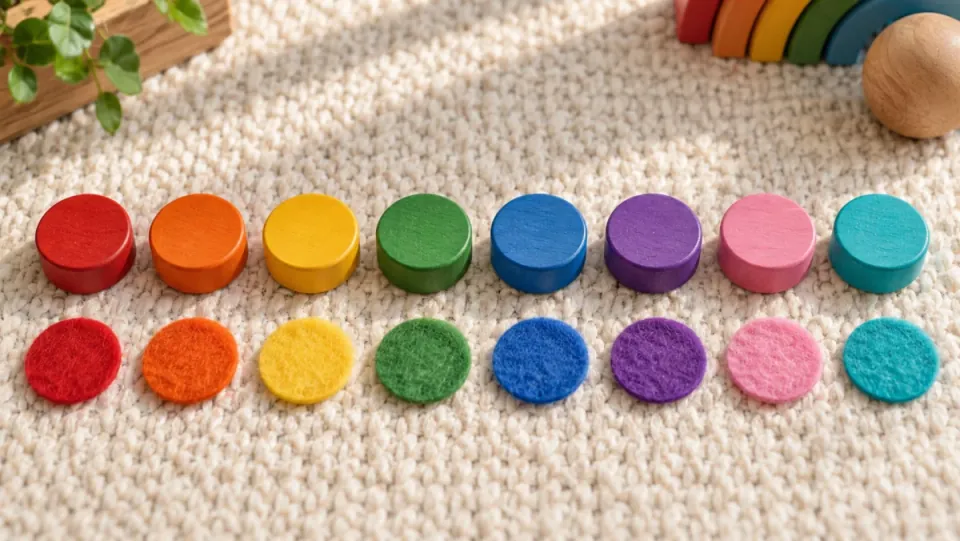
Count Objects
Given a collection within the stated size and arrangement boundary, coordinate one count word with each object exactly once and state the final cardinality.
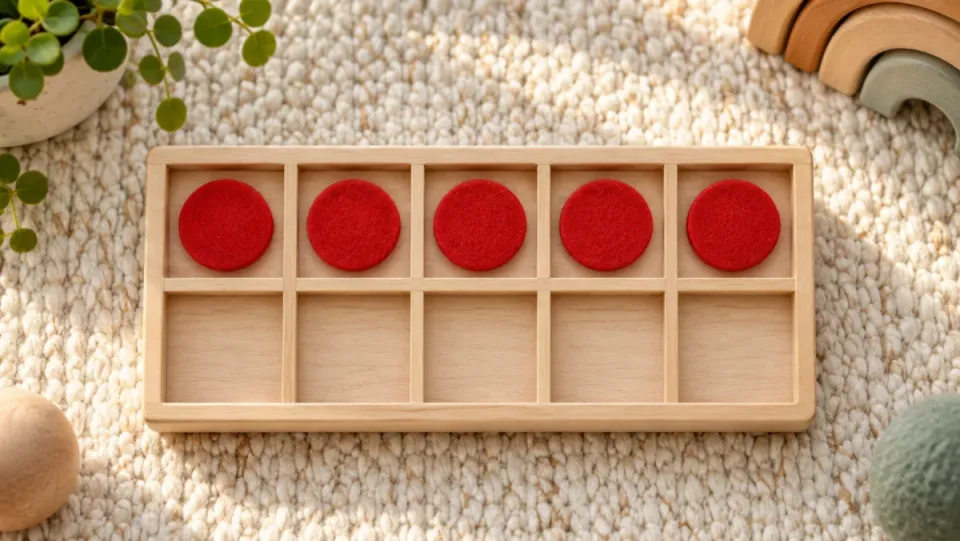
Instant Count Quantities Through 5
Given a briefly shown quantity from 1 through 5, recognize and name the quantity without counting each object.
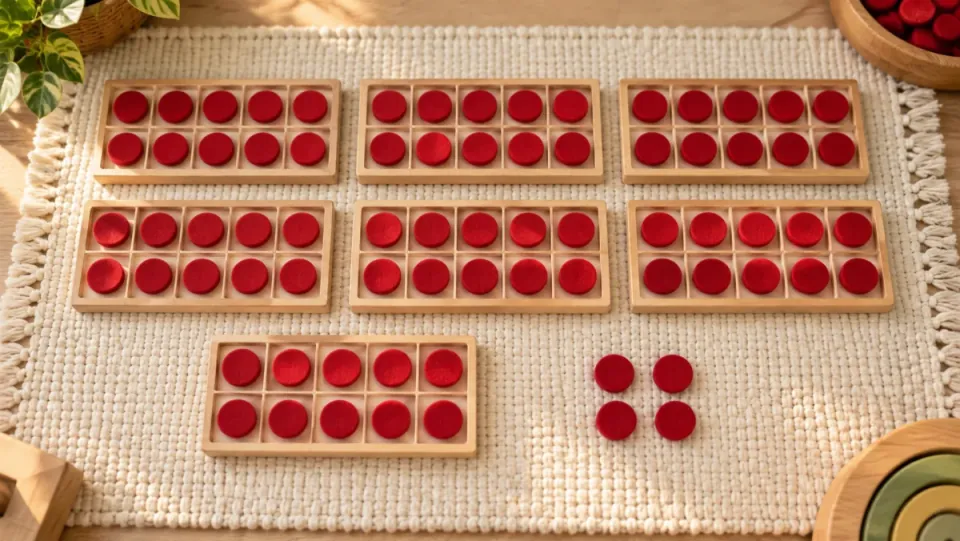
Count Grouped Collections Extension
Given a collection organized into visible equal groups of five or ten with possible remaining single objects, determine and state its total cardinality through 100.
Produce objectsShowing a requested number of objects.2 skills
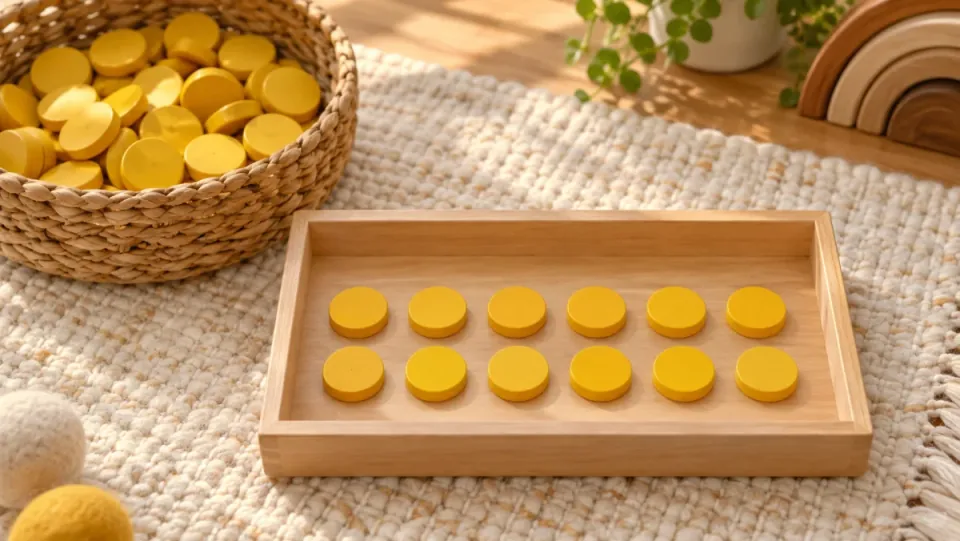
Produce a Requested Number of Objects
Given a spoken target and a larger available collection, select exactly the requested number of objects and stop at the target.
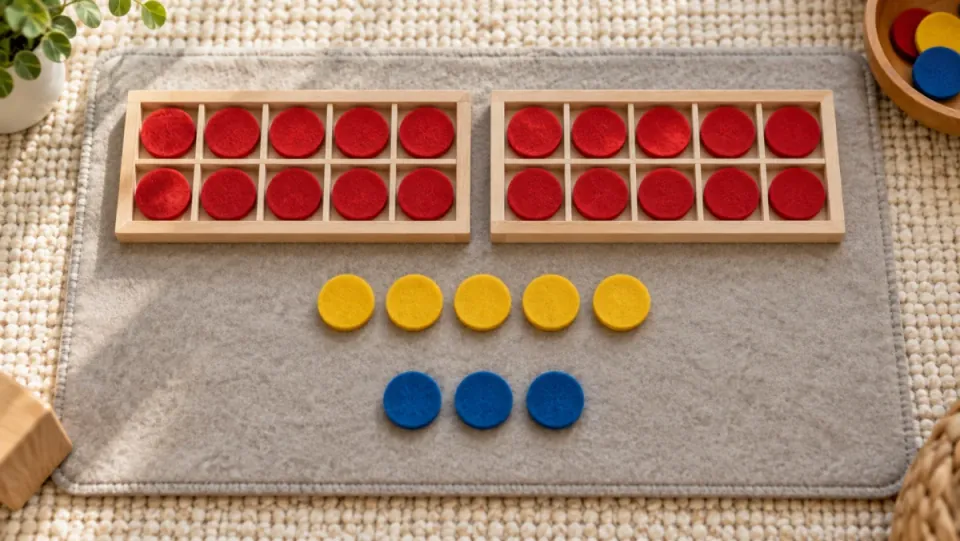
Produce a Requested Number Using Groups of Five and Ten Extension
Given a requested quantity and grouped objects, select or construct groups of five, groups of ten, or a mixture of groups and single objects whose total equals the target.
Explain countingPrinciples that explain how counting works.4 skills
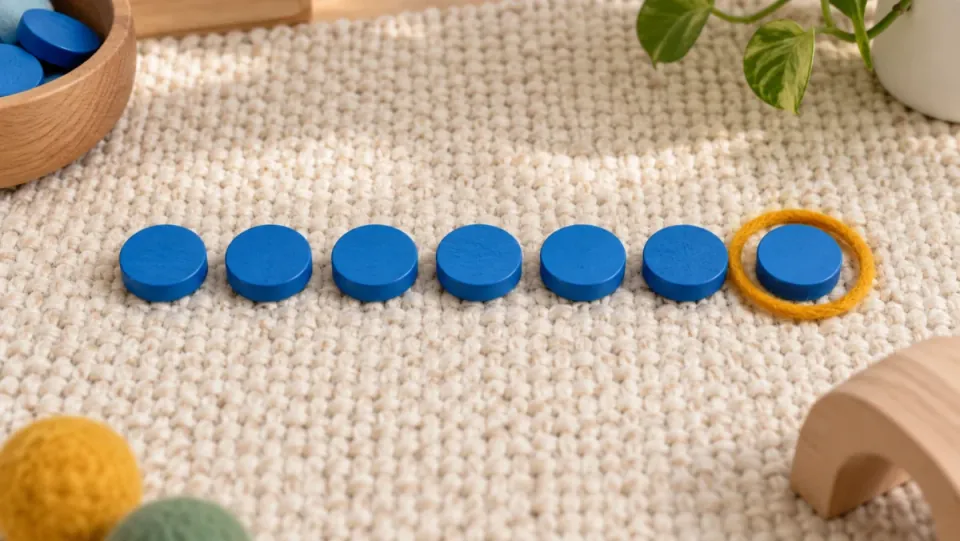
The Last Number Said Tells How Many
After correctly counting a collection, state that the last number word said tells the total number of objects in the collection without recounting.
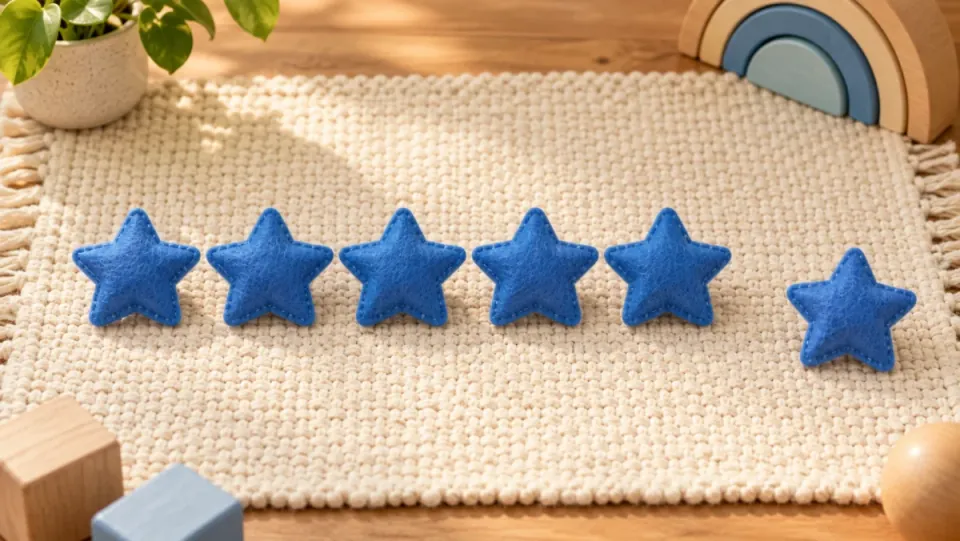
The Next Counting Number Means One More
Given a counted collection, predict that adding one object makes the total one greater and name the next counting number as the new total.
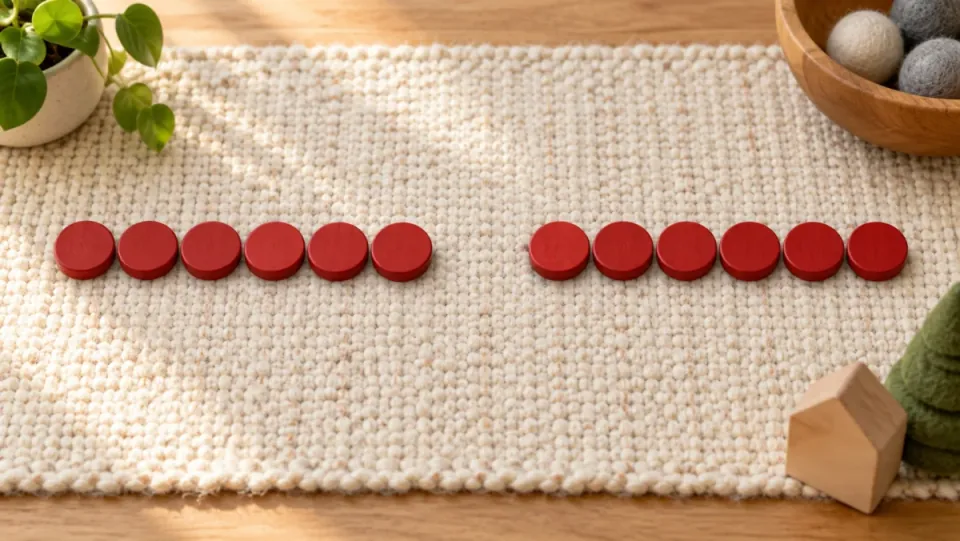
Counting Order Does Not Change How Many
Explain and demonstrate that a collection has the same cardinality when its objects are counted in a different order, including from the opposite end.
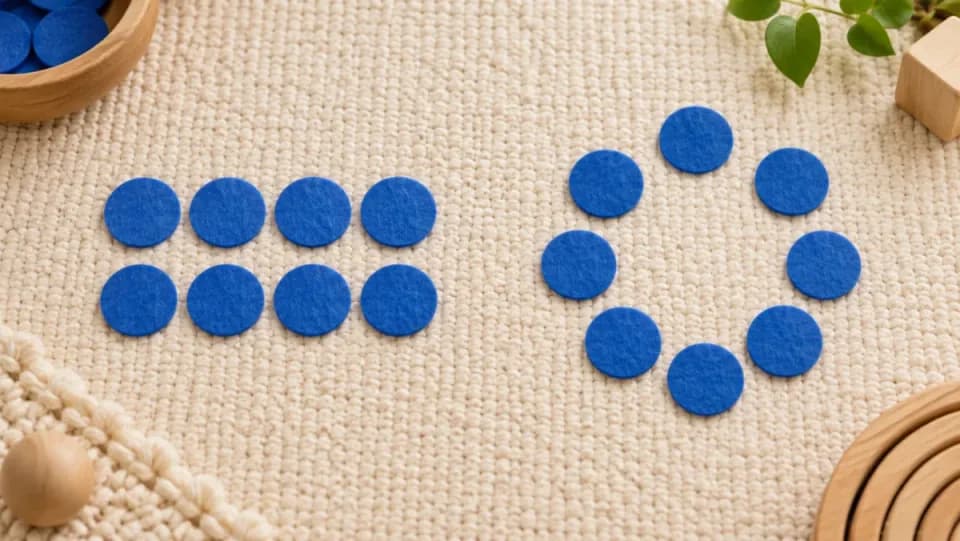
Moving Objects Does Not Change How Many
Explain and demonstrate that moving or rearranging every object in a collection, without adding or removing any, does not change its cardinality.
Reading numbersRecognizing numerals and connecting them to number names.1 skill
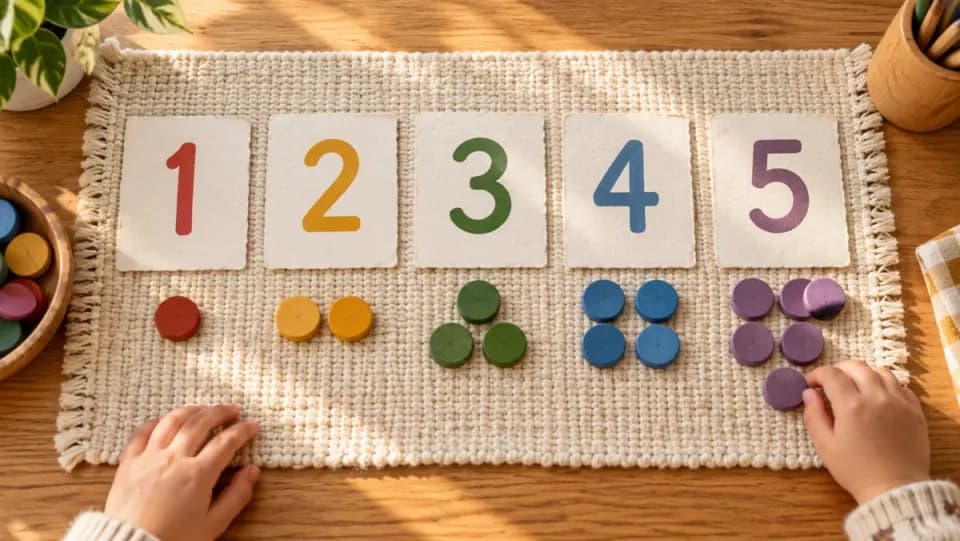
Read Numerals
Given a written numeral from 0 through 20 in mixed order, say the corresponding number name. No objects, counting, or numeral writing are required.
Writing numbersRepresenting spoken numbers and quantities with numerals.2 skills
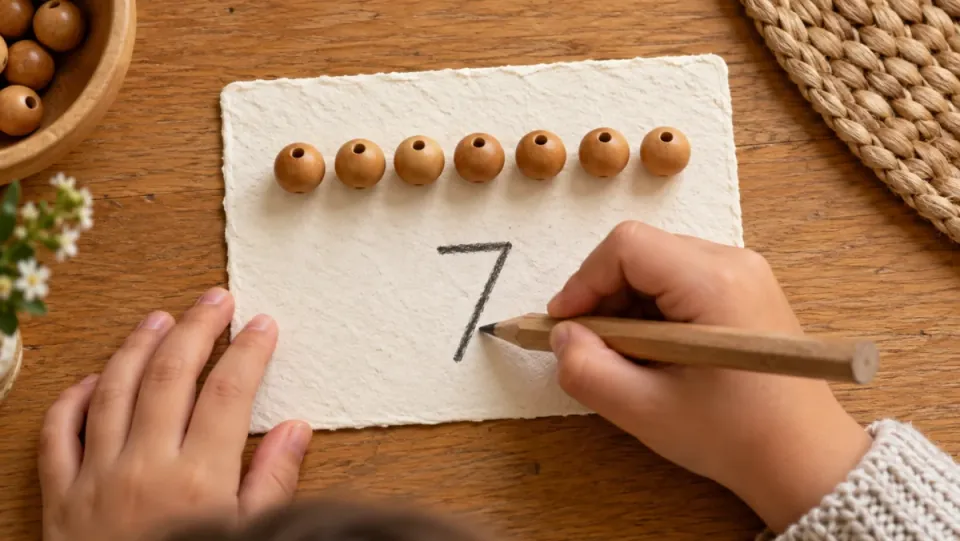
Write a Spoken Number
Given only a spoken number from 0 through 20, write the corresponding numeral without seeing a numeral or number word.
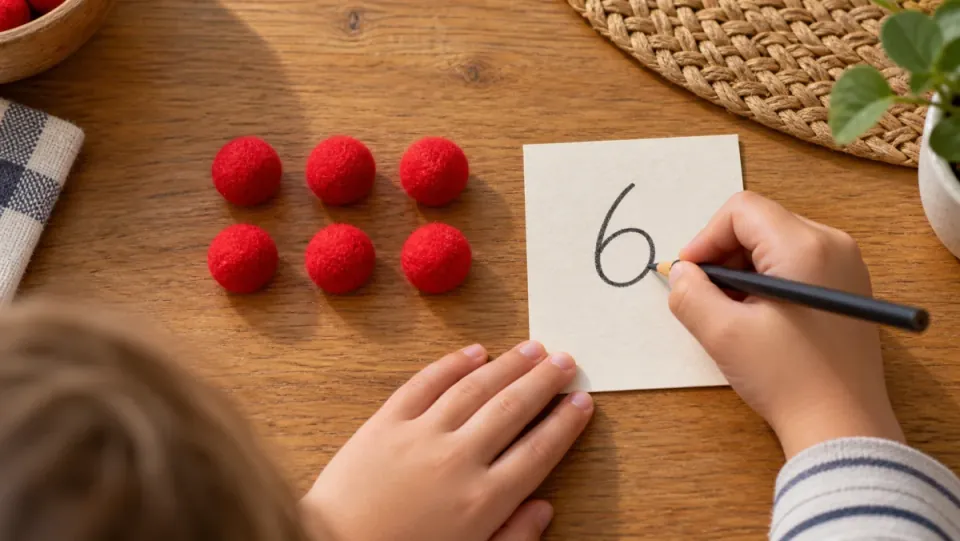
Write How Many
Given a visible collection of 0 through 20 objects, write the numeral that represents its cardinality.
Shapes & positionRecognizing shapes and describing where things are.10 skills
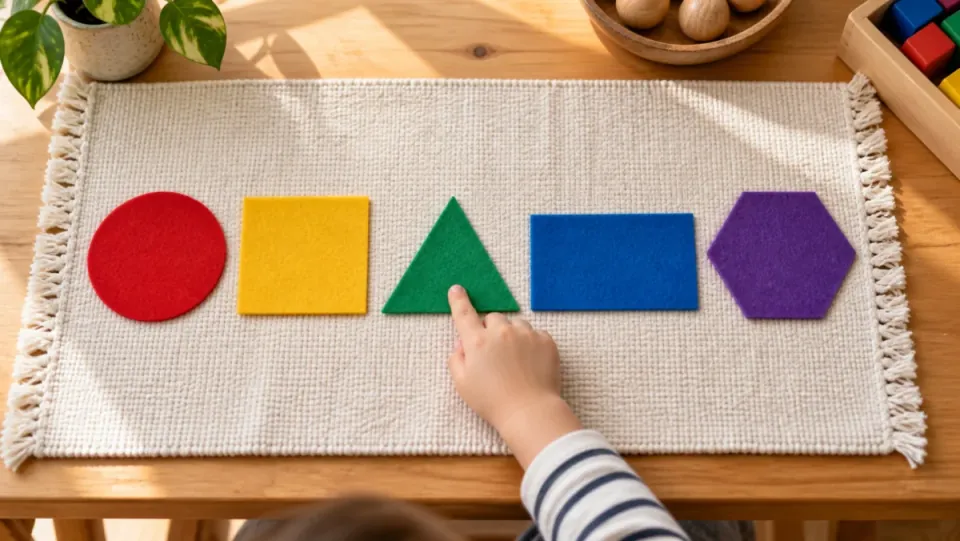
Name Common Flat Shapes
Given one circle, triangle, square, rectangle, or hexagon without an answer label, say its most specific common shape name across varied sizes and orientations.
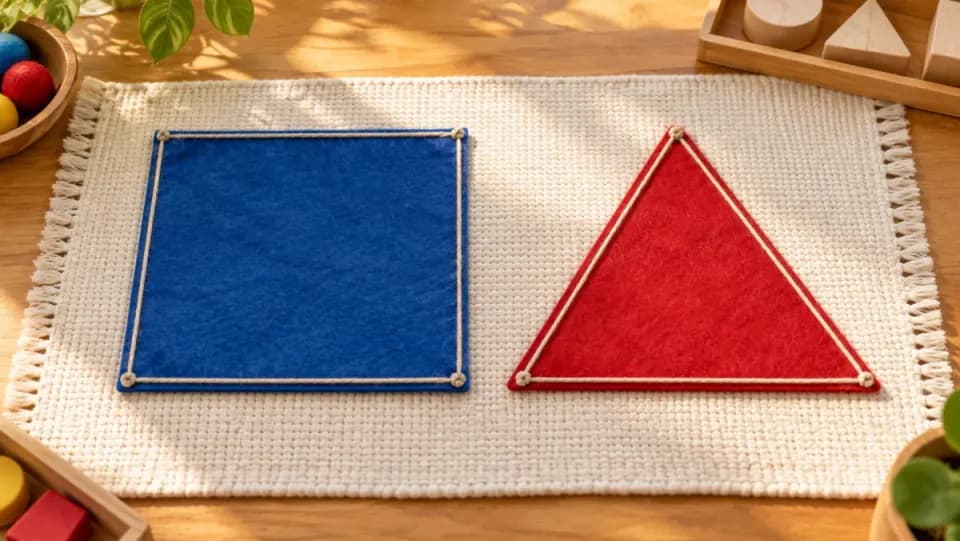
Compare Flat-Shape Properties
Given two flat shapes and several property statements, select the true comparison about their sides, corners, or equal side lengths.
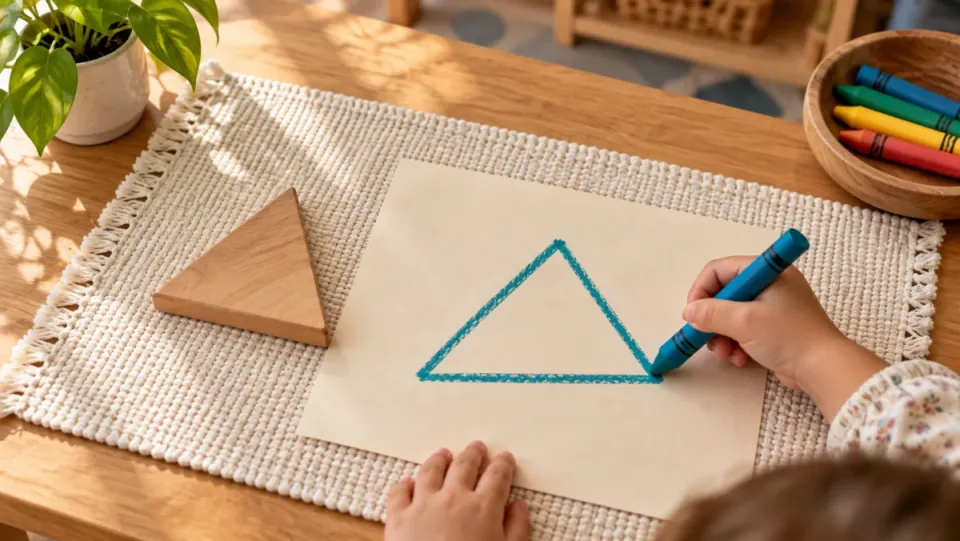
Draw a Named Flat Shape
Given the spoken and written name of a flat shape, draw one recognizable instance without a tracing or copying guide.
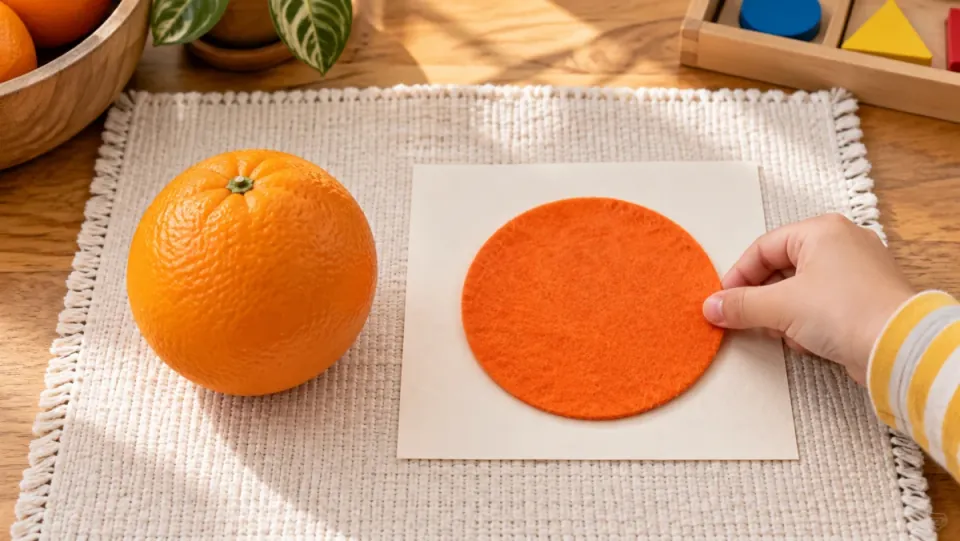
Model a Flat Shape from a Familiar Object
Given a clear view of a familiar object's flat face or panel, draw the flat shape represented by its outside edge.
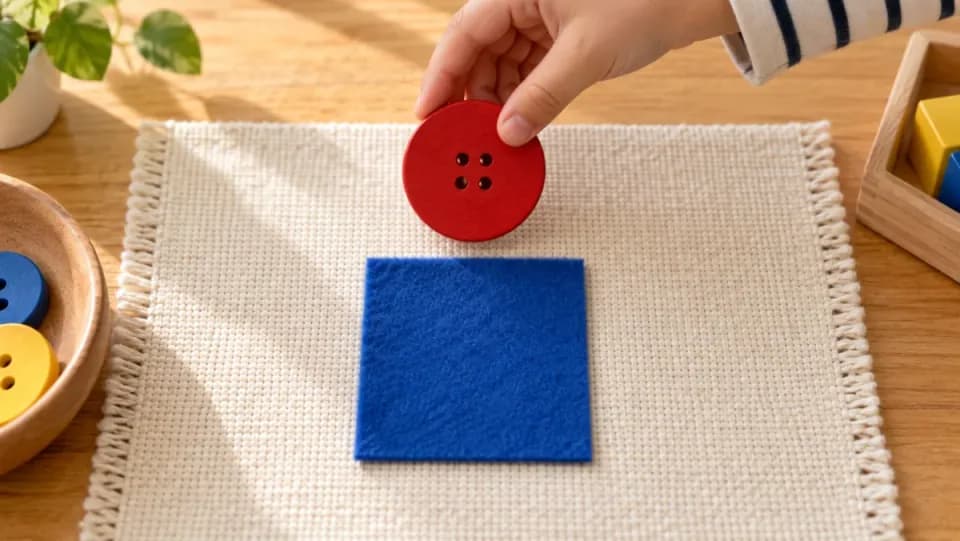
Place Objects Above or Below
Given two objects and a named vertical relation, place one object above or below the other from a fixed front viewpoint.
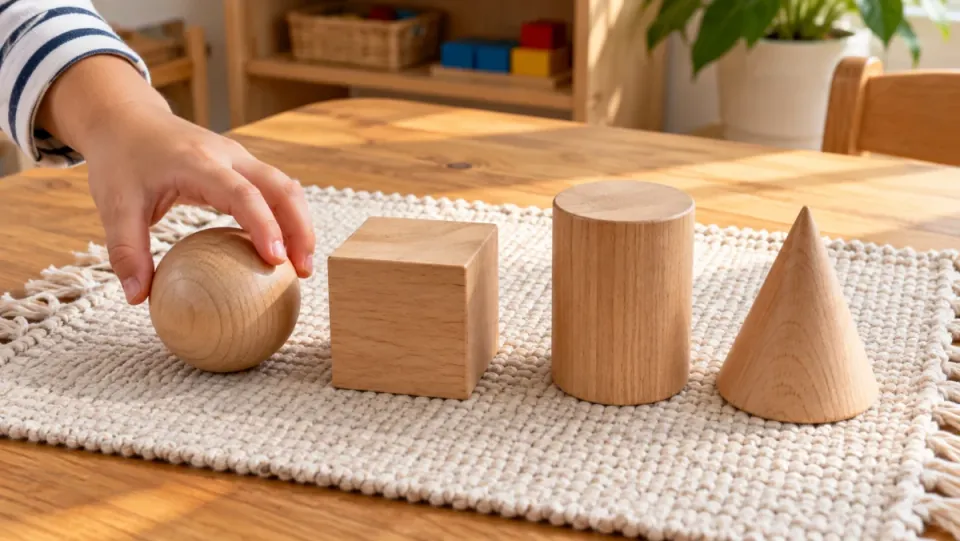
Name Familiar Solid Shapes
Given one familiar solid model without an answer label, say cube, sphere, cylinder, cone, or rectangular prism as its most specific common name.
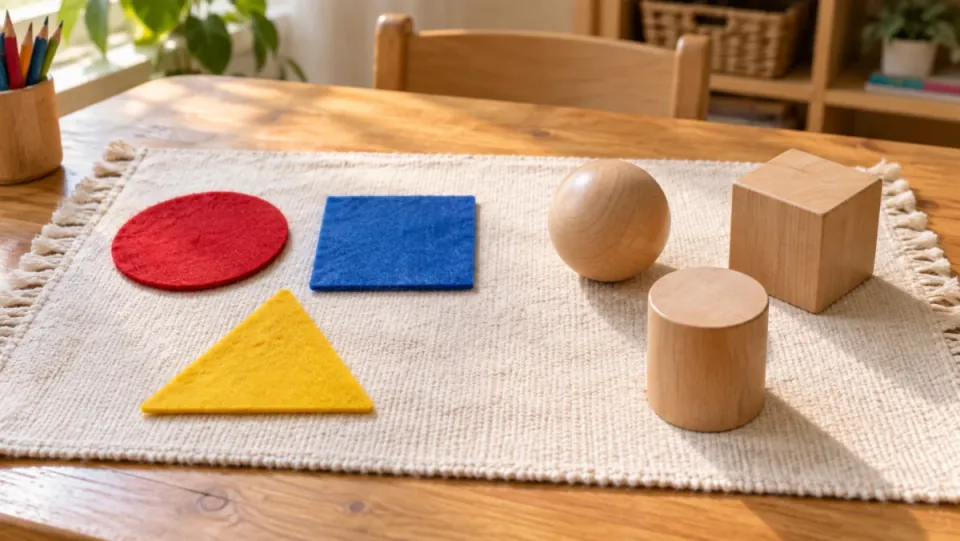
Distinguish Flat and Solid Shapes
Given a picture representing a geometric figure, select whether the represented figure is flat (two-dimensional) or solid (three-dimensional).
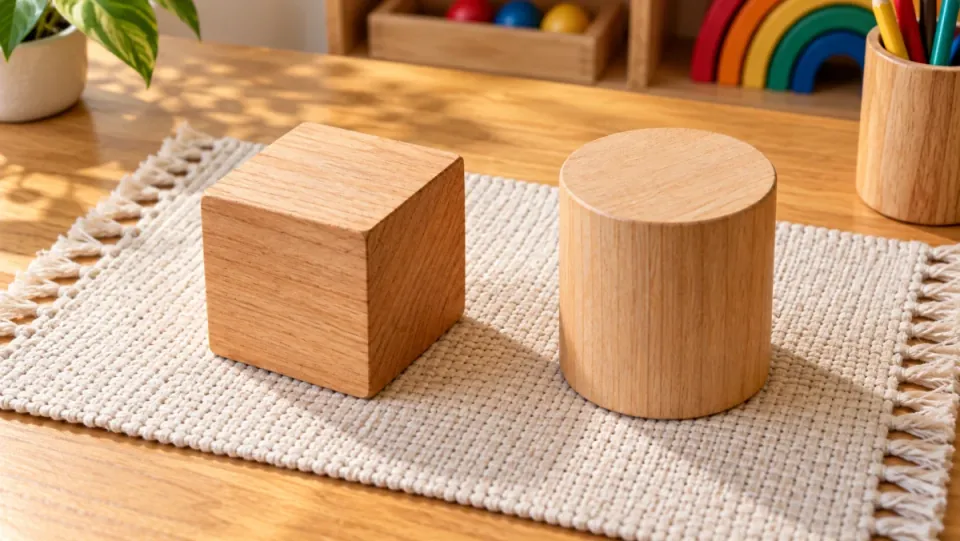
Compare Solid-Shape Properties
Given two solid shapes and several property statements, select the true comparison about flat or curved surfaces and whether the solids can roll, stack, or slide.
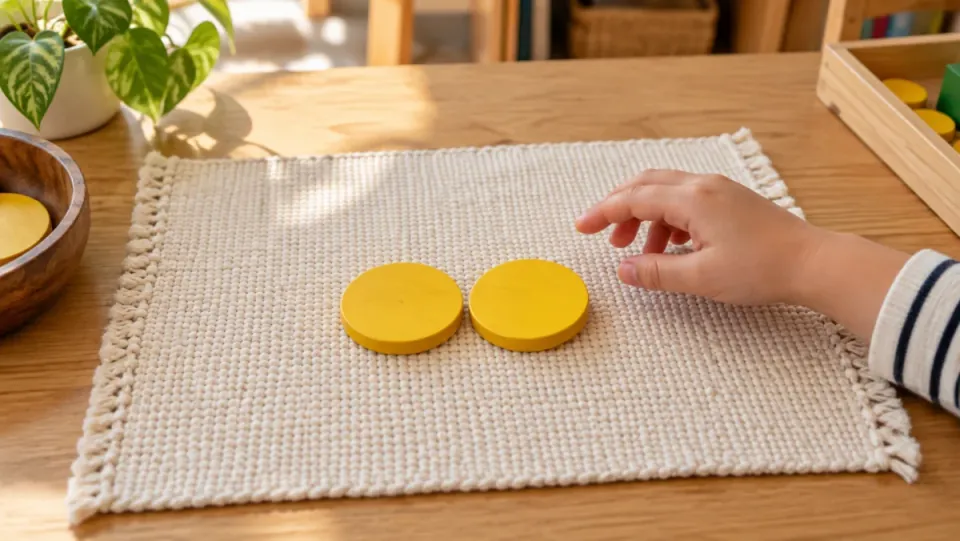
Place Objects Beside One Another
Given two objects and a request to put them beside or next to one another, place one object adjacent to the other across varied left-right arrangements.
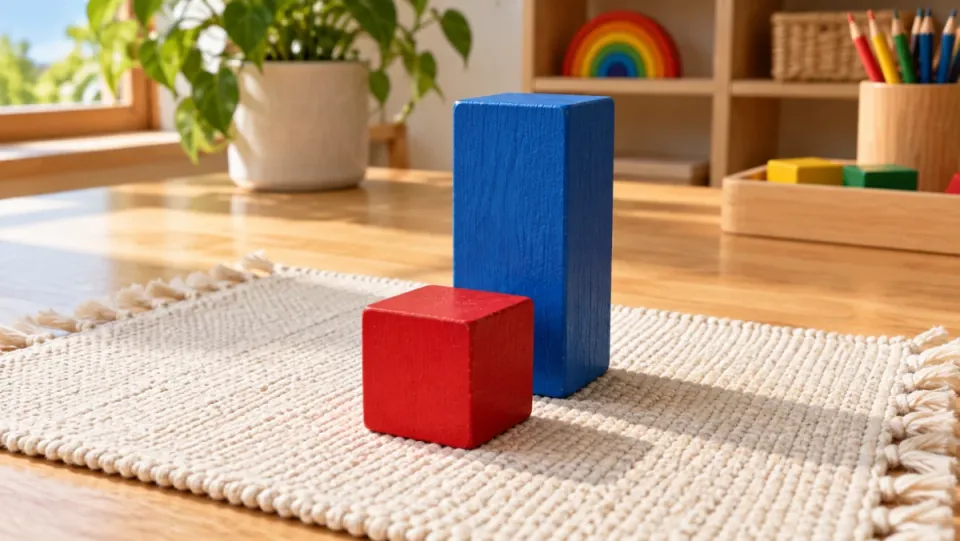
Place Objects In Front or Behind
Given two objects, an explicit front viewpoint, and a named depth relation, place one object in front of or behind the other using occlusion.
MeasurementComparing, sorting, and describing measurable attributes.10 skills
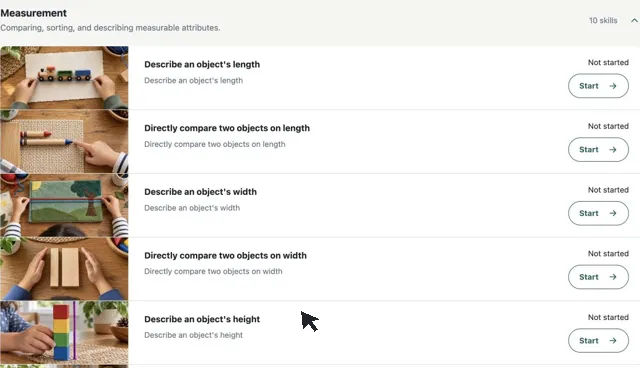
Describe an object's length
Describe an object's length
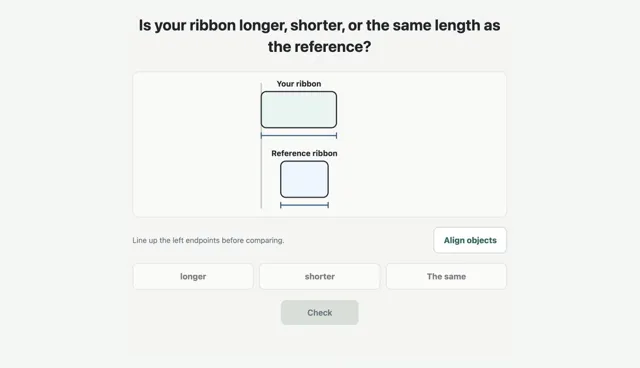
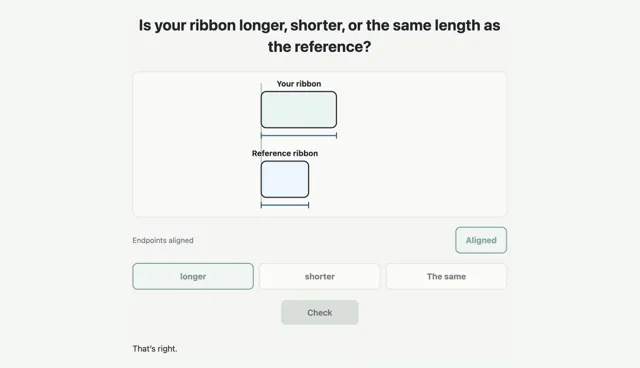
Directly compare two objects on length
Directly compare two objects on length
Describe an object's width
Describe an object's width
Directly compare two objects on width
Directly compare two objects on width
Describe an object's height
Describe an object's height
Directly compare two objects on height
Directly compare two objects on height
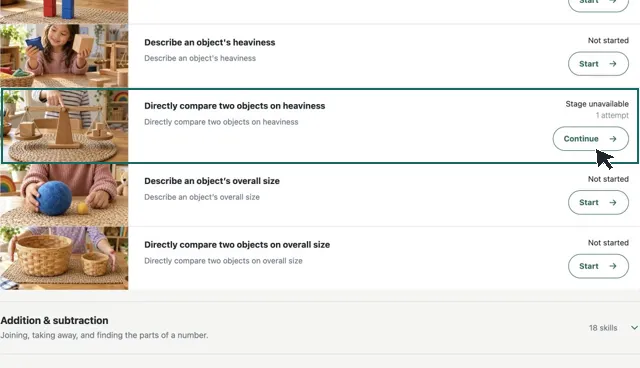
Describe an object's heaviness
Describe an object's heaviness
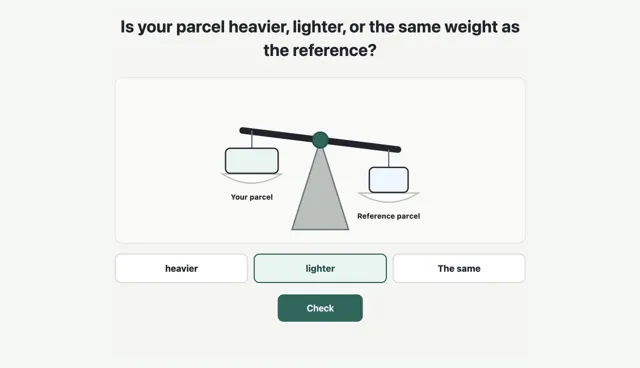
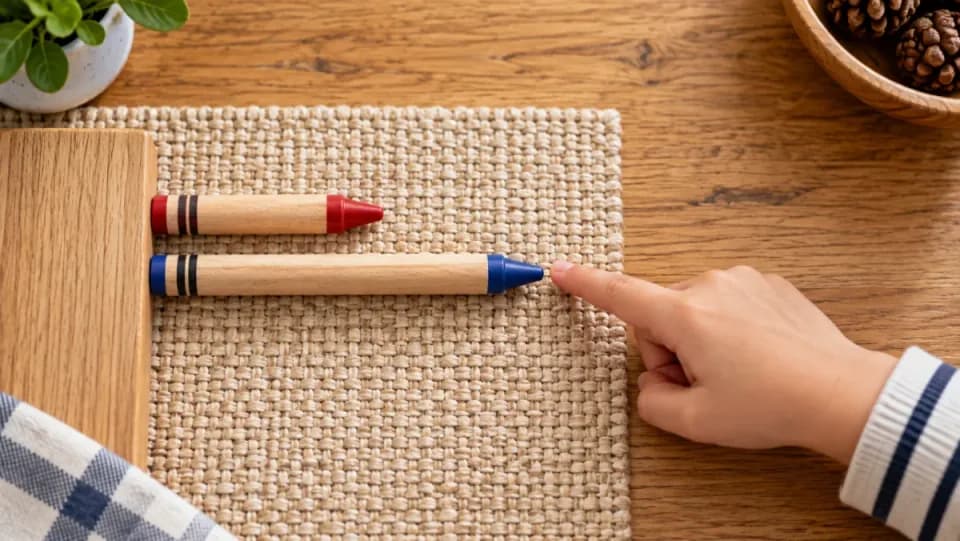
Directly compare two objects on heaviness
Directly compare two objects on heaviness
Describe an object’s overall size
Describe an object’s overall size
Directly compare two objects on overall size
Directly compare two objects on overall size
Addition & subtractionJoining, taking away, and finding the parts of a number.18 skills
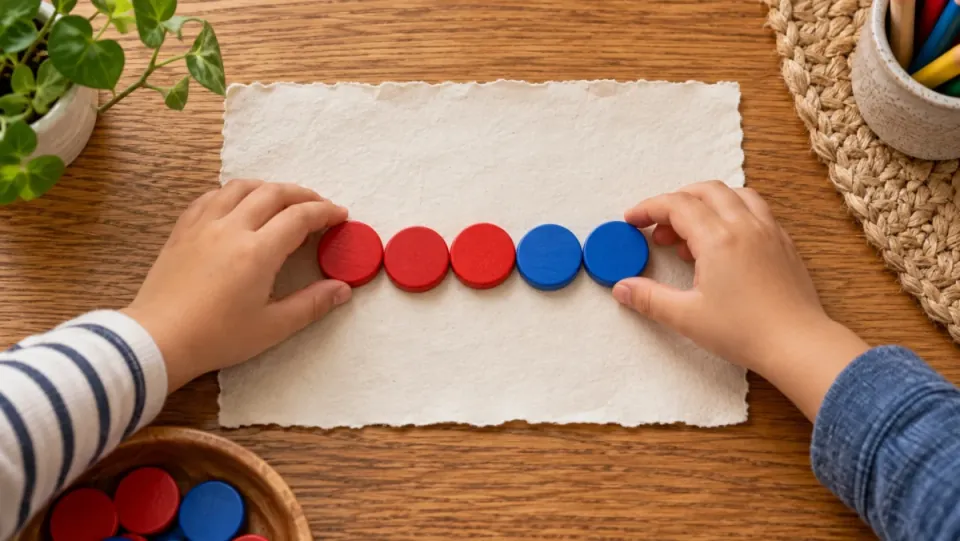
Understand addition as joining groups or adding more
Understand addition as joining groups or adding more
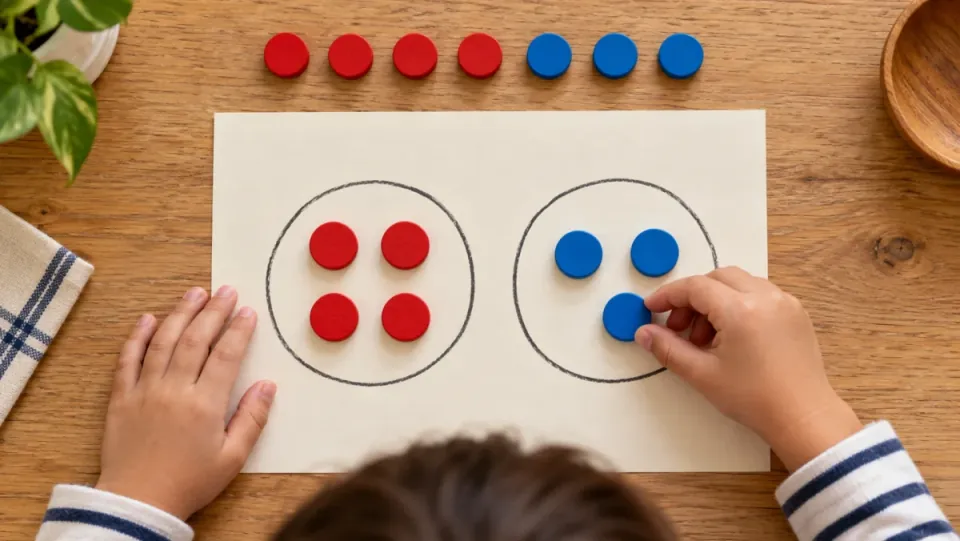
Represent an addition situation with objects or a structural drawing
Represent an addition situation with objects or a structural drawing
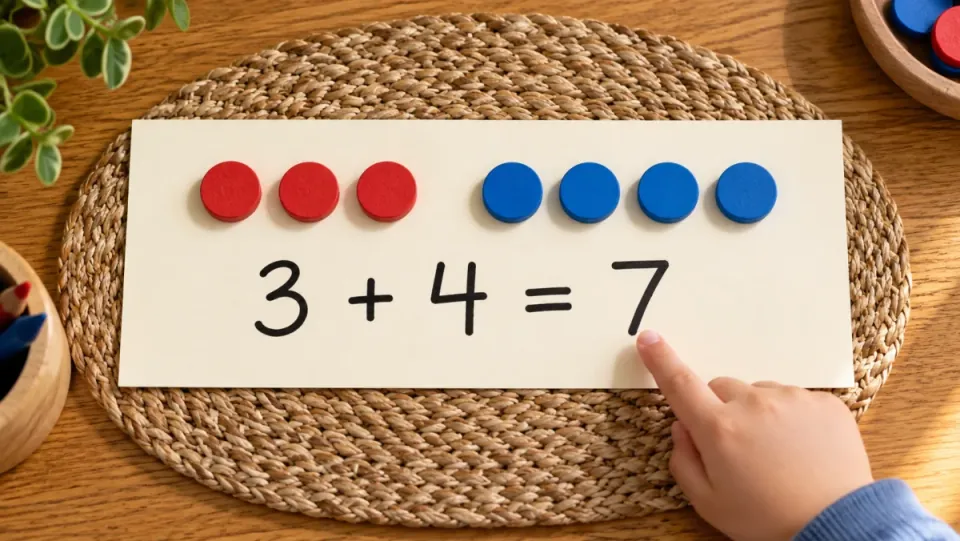
Write an equation for an addition situation
Write an equation for an addition situation
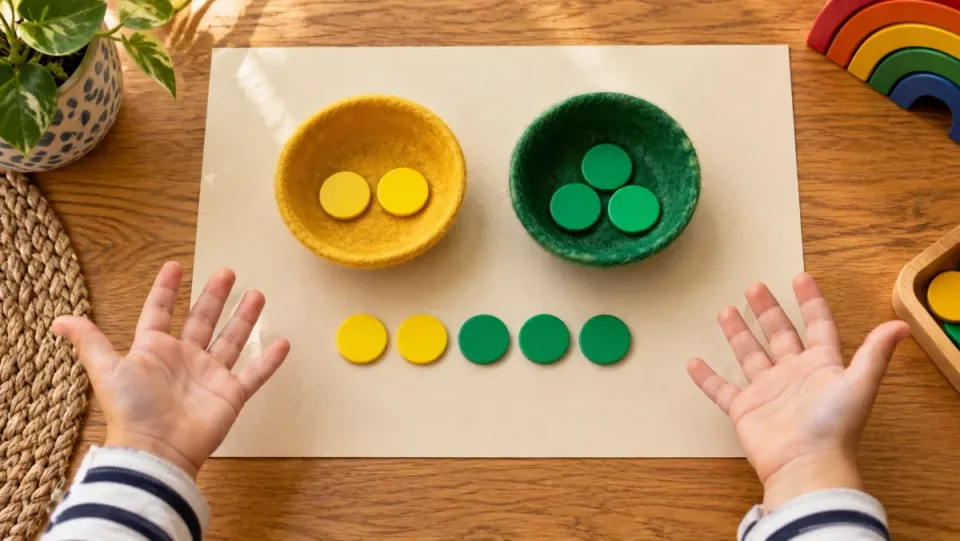
Explain an addition representation verbally
Explain an addition representation verbally
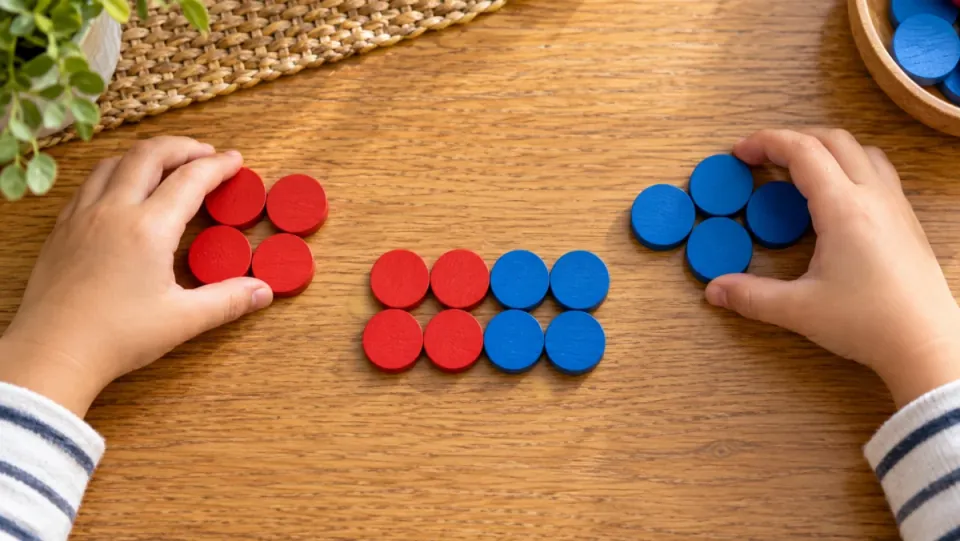
Find how many there are when two groups are put together
Find how many there are when two groups are put together
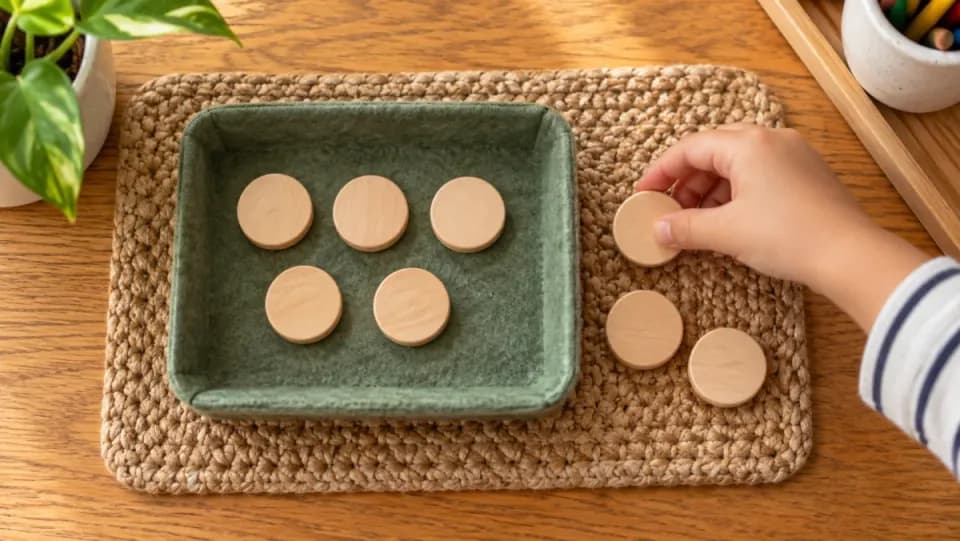
Find how many there are after more are added
Find how many there are after more are added
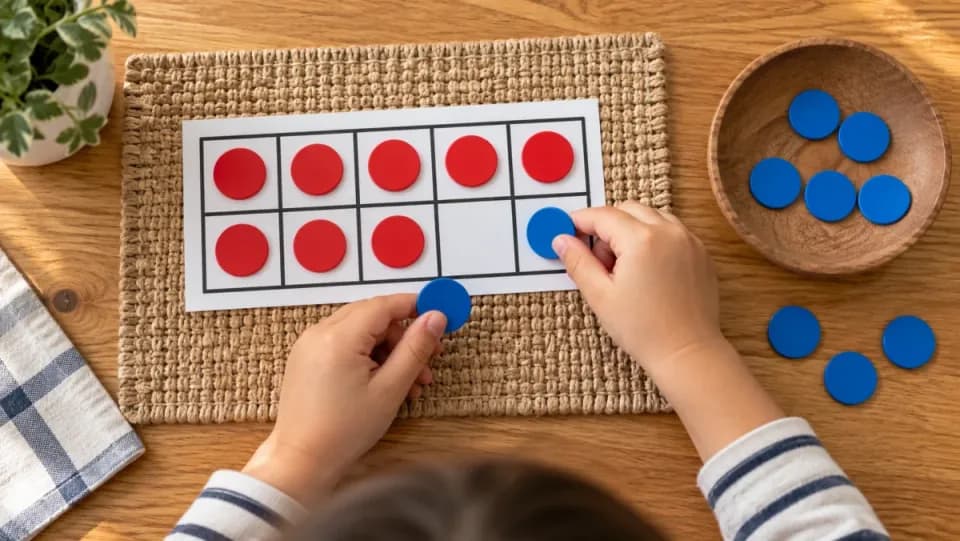
Accurately add quantities within 10 using a valid strategy
Accurately add quantities within 10 using a valid strategy
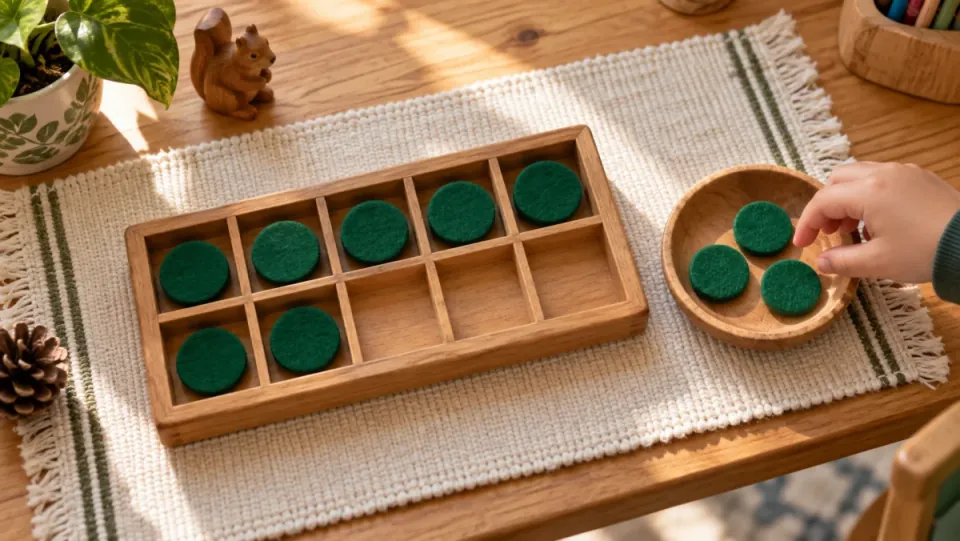
Demonstrate Addition Fluency
Demonstrate Addition Fluency
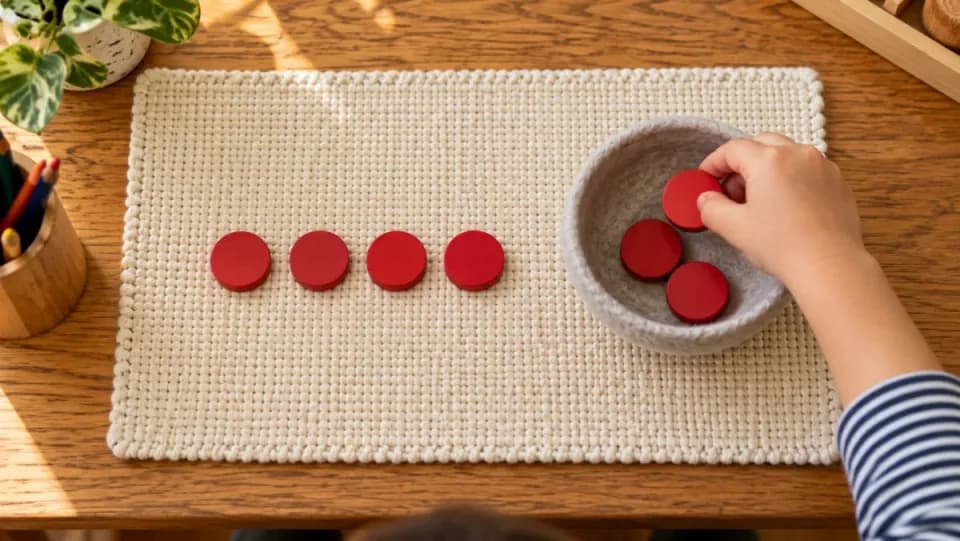
Understand subtraction as taking away or separating a group
Understand subtraction as taking away or separating a group
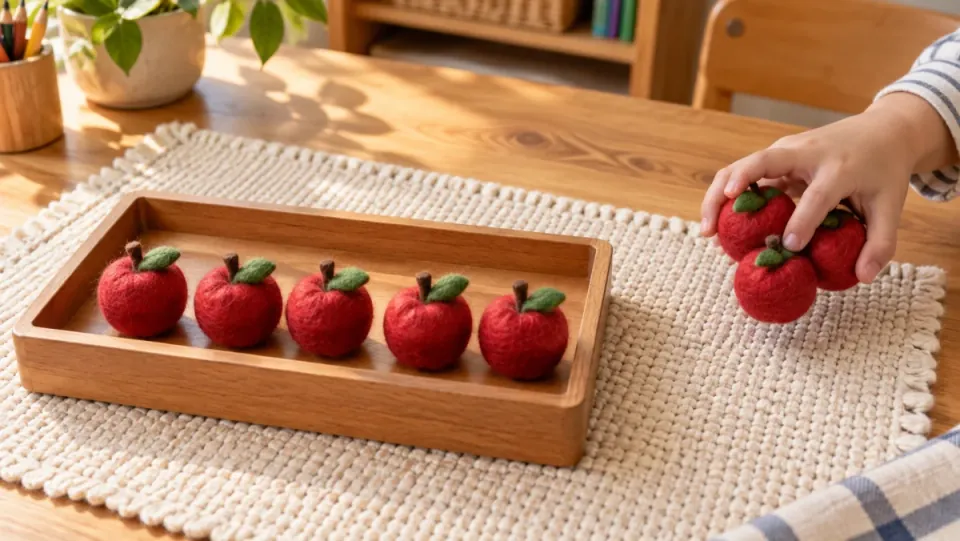
Represent a subtraction situation with objects or a structural drawing
Represent a subtraction situation with objects or a structural drawing
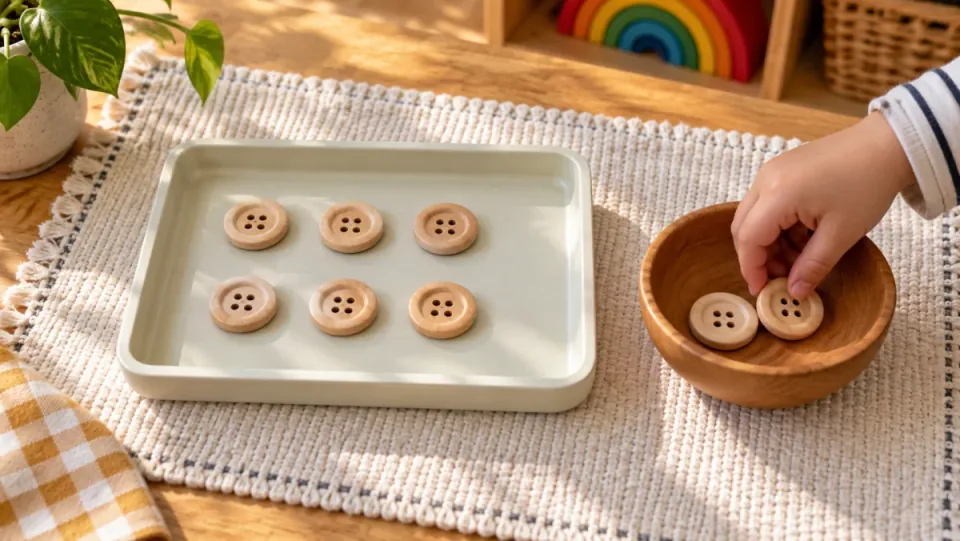
Write an equation for a subtraction situation
Write an equation for a subtraction situation
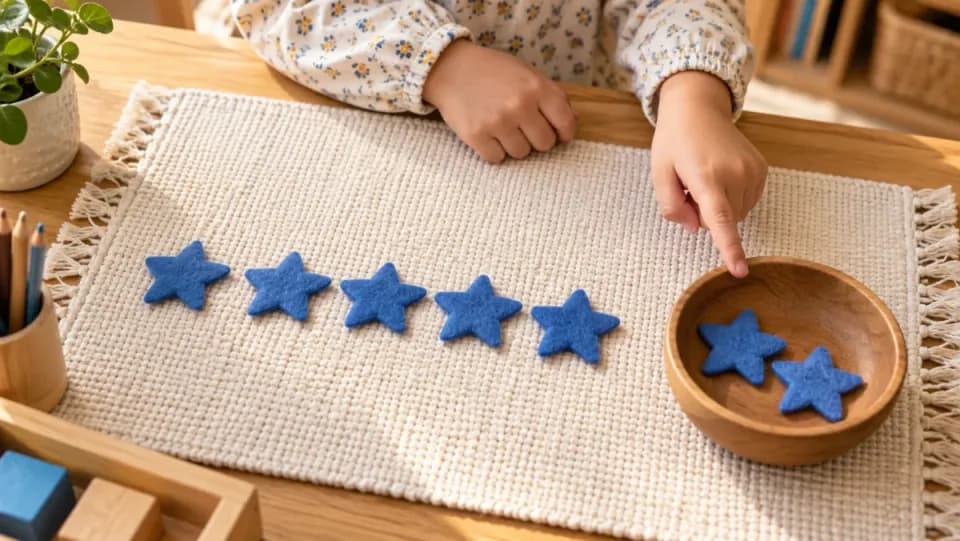
Explain a subtraction representation verbally
Explain a subtraction representation verbally
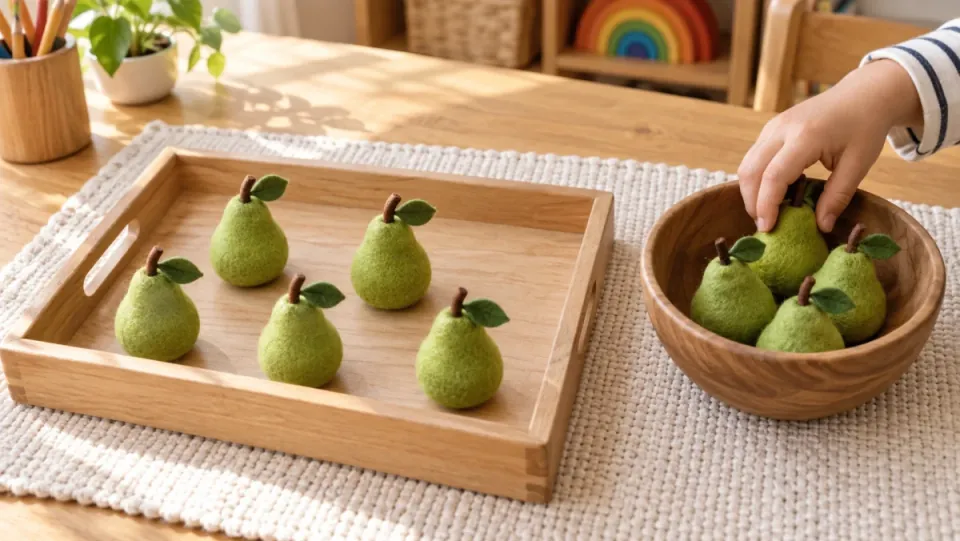
Find how many remain after some are taken away
Find how many remain after some are taken away
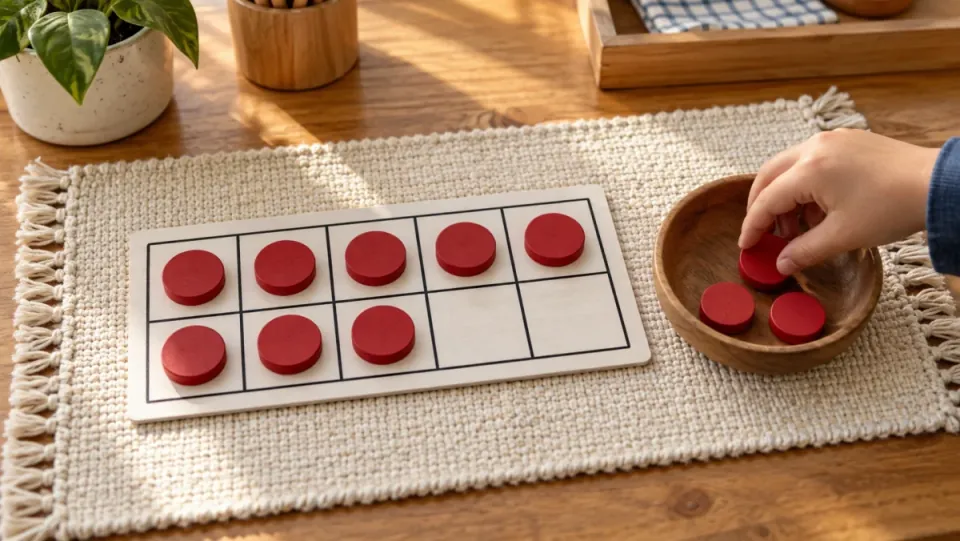
Accurately subtract quantities within 10 using a valid strategy
Accurately subtract quantities within 10 using a valid strategy
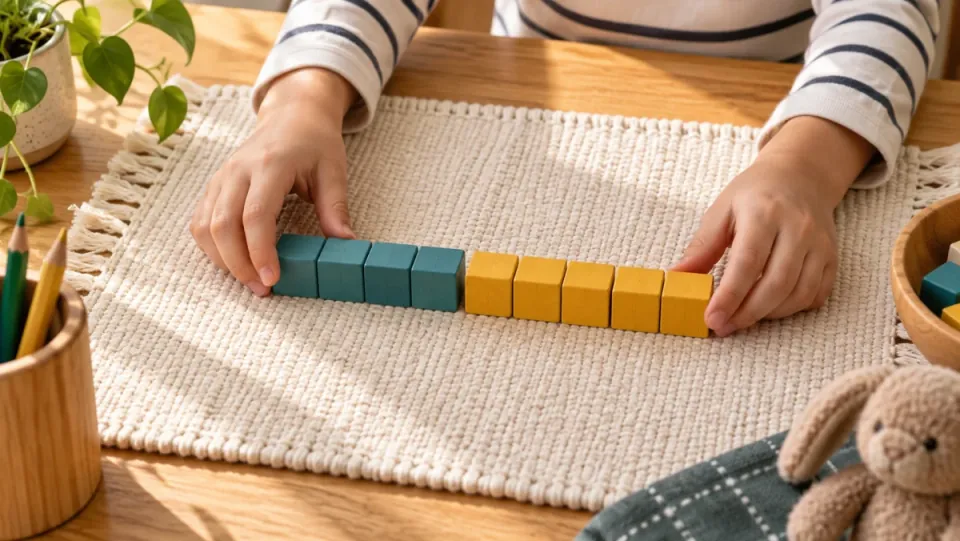
Demonstrate Subtraction Fluency
Demonstrate Subtraction Fluency
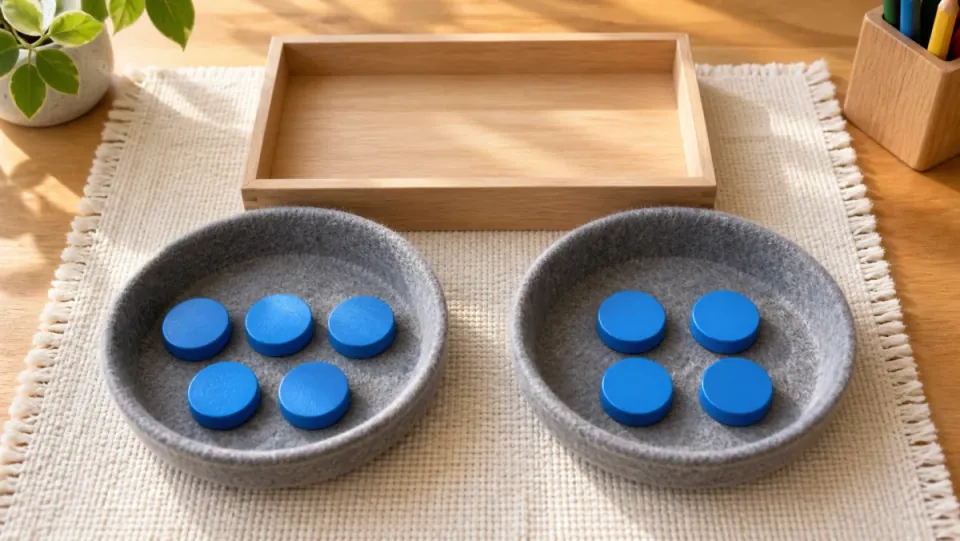
Decompose a number into two or more parts
Decompose a number into two or more parts
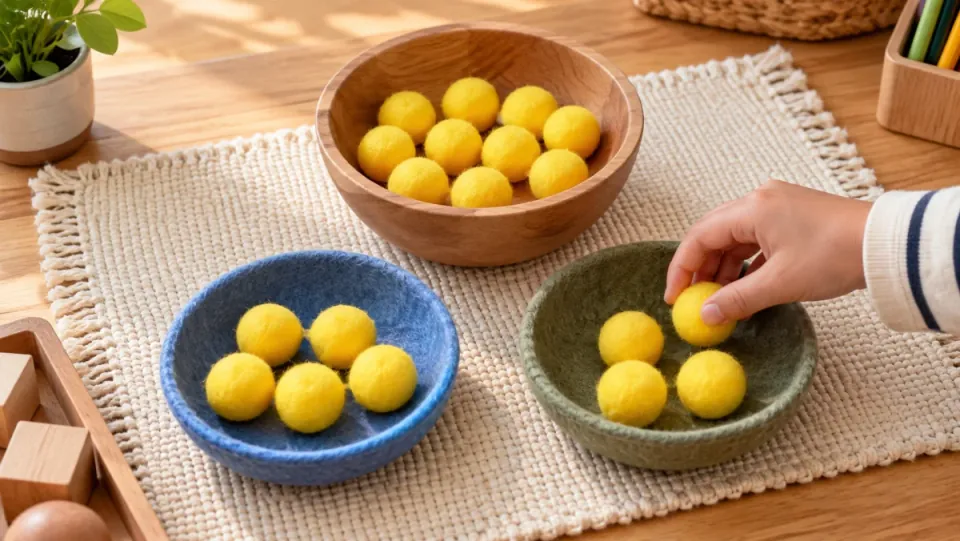
Find two parts that make a given whole within 10
Find two parts that make a given whole within 10
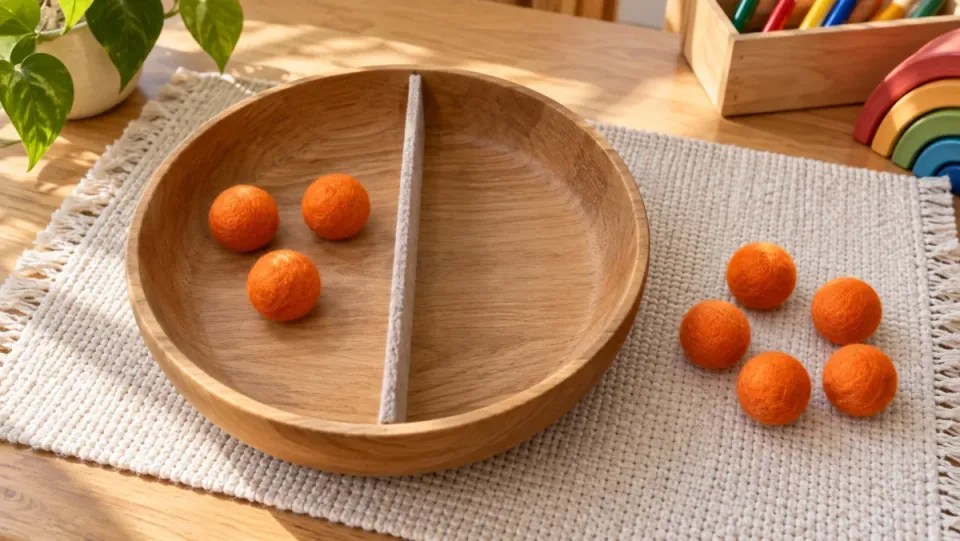
Find the missing part when the whole and one part are known
Find the missing part when the whole and one part are known
Place Value Number System4 skills

Bundle ten ones as one ten
The learner can bundle ten ones as one ten.

Compose a teen number from one ten and ones
The learner can compose a teen number from one ten and ones.

Explain numbers 11-19 as one ten and additional ones
The learner can explain numbers 11-19 as one ten and additional ones.

Decompose a teen number into one ten and ones
The learner can decompose a teen number into one ten and ones.
Data1 skill

Classify items into given categories
The learner can classify items into given categories.
Numbers1 skill

Compare the numbers of objects in two groups
The learner can compare the numbers of objects in two groups.
Geometry & Shapes1 skill

Compose smaller two-dimensional shapes to form a larger shape
The learner can compose smaller two-dimensional shapes to form a larger shape.
Money1 skill

Determine the value of a money collection
The learner can determine the value of a money collection.